


Most WordPress site owners believe that high download numbers mean a plugin is better, but studies reveal there is no universal standard for measuring true popularity. Relying on surface-level stats can fuel misconceptions about quality, security, and long-term performance. Understanding how plugin popularity really works helps you avoid common pitfalls, choose solutions that genuinely fit your needs, and strengthen your site’s reliability in a crowded digital world.
Defining Plugin Popularity and Common Myths
Plugin popularity represents more than just download numbers or superficial metrics. Understanding its true meaning requires examining multiple dimensions that contribute to a plugin’s actual impact and significance within the WordPress ecosystem. As research from arXiv highlights, there is no universal standard for measuring software package popularity, which creates potential misconceptions about what truly defines a “popular” plugin.
Plugin Popularity Myths often emerge from oversimplified interpretations of raw data. The Woozle effect demonstrates how repeated unverified claims can create false narratives about plugin significance. Common misconceptions include:
- Equating total downloads with actual quality
- Assuming older plugins are automatically more reliable
- Believing high user count guarantees consistent performance
- Thinking popularity directly translates to security or compatibility
In reality, plugin popularity is a nuanced concept encompassing several critical factors:
- Active installation base
- Consistent update frequency
- Community engagement and support
- Performance and security track record
- Compatibility with current WordPress versions
Professional WordPress developers understand that true plugin value extends far beyond surface-level metrics. Comprehensive evaluation requires deep analysis of a plugin’s technical architecture, developer reputation, and real-world implementation success.
For those seeking a deeper understanding of plugin ecosystem dynamics, our guide to WordPress plugin trends provides comprehensive insights into how plugins evolve and impact website performance.
Major Types of Plugin Popularity Metrics
Measuring plugin popularity requires a nuanced approach that goes beyond simplistic counting methods. As research from arXiv reveals, software package popularity involves multiple complex metrics, with at least nine distinct measurement approaches for understanding a plugin’s true impact.
Quantitative Popularity Metrics represent the most straightforward method of assessment:
- Total Download Count
- Active Installation Numbers
- Frequency of Updates
- User Ratings and Reviews
- Compatibility with WordPress Versions
Qualitative Popularity Indicators offer deeper insights into a plugin’s ecosystem significance. Altmetrics demonstrate that popularity extends beyond traditional numeric measurements, incorporating elements like:
- Social Media Mentions
- Online Community Discussions
- Developer Reputation
- Support Forum Engagement
- Third-Party References and Citations
Professional WordPress ecosystem researchers understand that comprehensive plugin evaluation requires integrating both quantitative and qualitative metrics.
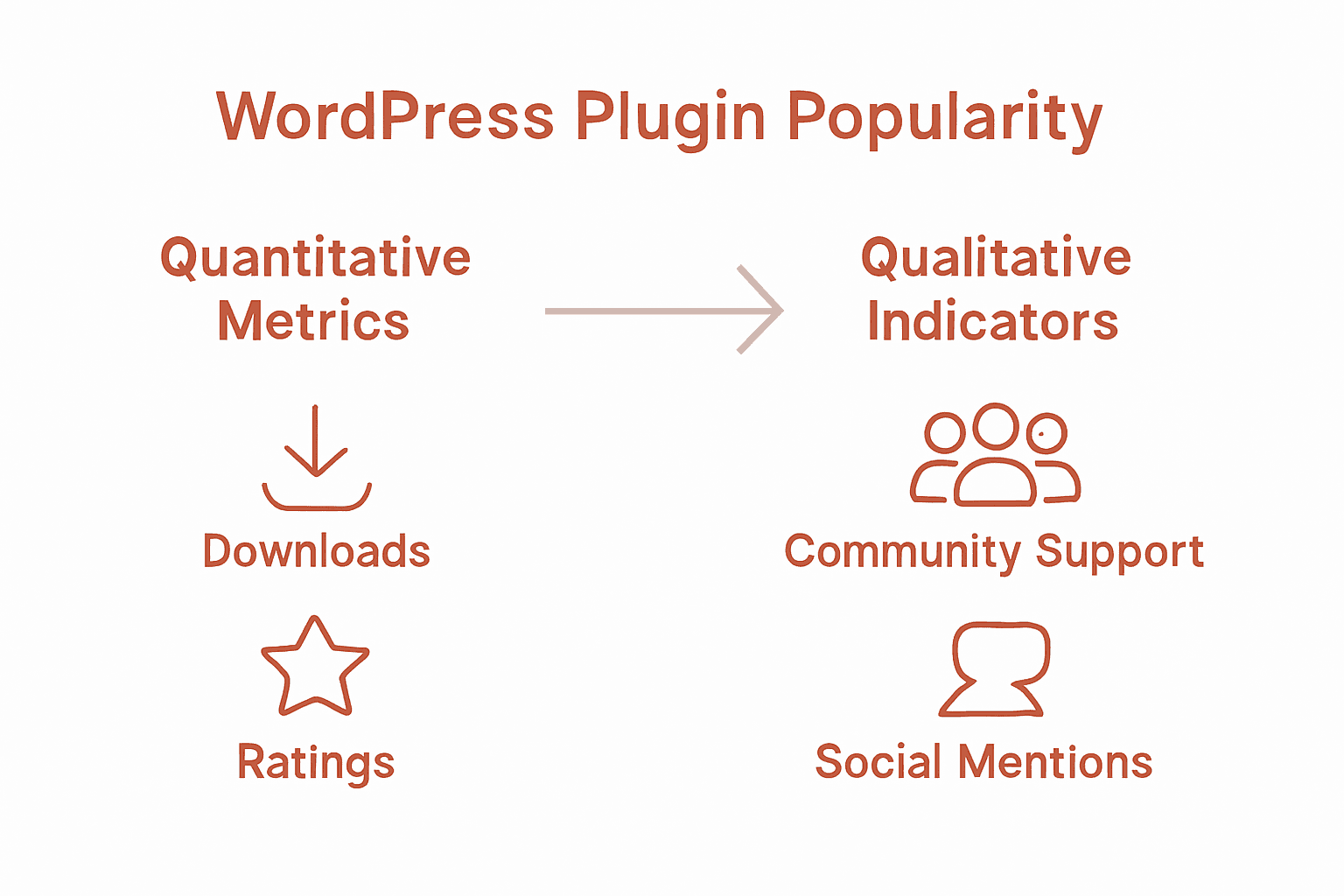 This holistic approach prevents misleading interpretations and provides a more accurate representation of a plugin’s genuine value and impact.

For developers and website managers seeking deeper insights into plugin performance, our guide on analyzing WordPress plugins offers comprehensive strategies for conducting thorough plugin assessments.
Factors Affecting WordPress Plugin Adoption
Plugin adoption in the WordPress ecosystem is a complex process driven by multiple interconnected factors. WPWorth analysis reveals that certain plugin categories consistently attract more user attention, with critical functional areas like SEO, security, and performance emerging as primary drivers of plugin selection.
Key Adoption Factors include:
- Compatibility with Current WordPress Versions
- User-Friendly Interface
- Performance Impact
- Regular Security Updates
- Positive User Reviews
- Cost-Effectiveness
- Integration Capabilities
Technological evolution plays a significant role in plugin adoption. As Watchful research highlights, the rise of Gutenberg has dramatically shifted plugin compatibility requirements. Developers now must create solutions that seamlessly integrate with the block editor, understanding that modern WordPress users prioritize plugins offering smooth, native experiences.
The psychological aspects of plugin selection cannot be overlooked. WordPress site owners typically seek plugins that not only solve immediate technical challenges but also provide long-term reliability, minimal resource consumption, and continuous development support. This means a plugin’s reputation, community engagement, and demonstrated commitment to innovation significantly influence its adoption potential.
For WordPress professionals seeking deeper insights into strategic plugin selection, our guide to the role of plugins in WordPress provides comprehensive strategies for making informed technological decisions.
Practical Uses in SEO, Security, and Marketing
Plugins serve as powerful tools that transform WordPress websites across critical business domains. Moldstud research highlights how interactive content plugins can significantly enhance user engagement and search engine optimization strategies.
SEO Enhancement Strategies:
- Automated Metadata Generation
- XML Sitemap Creation
- Schema Markup Implementation
- Page Speed Optimization
- Keyword Analysis Tools
- Backlink Monitoring
In the marketing ecosystem, plugins offer sophisticated capabilities for expanding digital reach. According to Moldstud insights, strategic plugin functionalities enable businesses to create community engagement platforms, implement advanced tracking mechanisms, and develop targeted outreach campaigns.
Security Considerations represent another critical plugin application. Modern WordPress security plugins provide comprehensive protection through:
- Real-Time Threat Detection
- Automated Malware Scanning
- Login Attempt Monitoring
- Two-Factor Authentication
- Regular Security Patch Updates
- Firewall Configuration
Professional WordPress managers understand that selecting the right plugins can dramatically transform website performance, security posture, and marketing effectiveness. Continuous evaluation and strategic plugin integration remain key to maintaining a competitive digital presence.
For WordPress professionals seeking to optimize their website’s strategic potential, our guide to SEO checkpoints provides comprehensive insights into leveraging plugin technologies effectively.
Risks, Misconceptions, and Market Limitations
Navigating the WordPress plugin ecosystem requires a critical understanding of potential pitfalls and inherent market complexities. arXiv research emphasizes that relying on a single popularity metric can lead to fundamentally misleading assessments of a plugin’s true value and performance.
Common Plugin Misconceptions include:
- Assuming High Download Numbers Guarantee Quality
- Believing Older Plugins Are Inherently More Reliable
- Overlooking Compatibility and Performance Impacts
- Ignoring Long-Term Maintenance and Support Challenges
- Underestimating Security Vulnerabilities
The Woozle effect demonstrated by Wikipedia reveals how repeated unverified claims can create dangerous misconceptions within technology communities. This phenomenon is particularly prevalent in plugin ecosystems, where marketing narratives can quickly overshadow objective technical assessments.
Market Limitations present significant challenges for WordPress plugin developers and users:
- Fragmented Ecosystem
- Rapid Technological Changes
- Increasing Development Complexity
- Heightened Security Requirements
- Limited Standardization
- Competitive Market Saturation
Professional WordPress managers must approach plugin selection with a strategic, multi-dimensional perspective. This means evaluating technical capabilities, community reputation, ongoing development commitment, and potential long-term integration challenges.
For WordPress professionals seeking deeper insights into navigating these complex landscapes, our guide on plugin detection tools provides comprehensive strategies for making informed technological decisions.
Unlock True WordPress Plugin Insights and Gain a Competitive Edge
Understanding plugin popularity is complex. Simply relying on download counts or superficial metrics leaves you vulnerable to misinformation and costly mistakes. This article highlights common challenges like the Woozle effect and the need for multifaceted evaluation of plugins including active installations, update frequency, and community engagement. If you want to move beyond guesswork and embrace a data-driven approach, gaining precise insights into the WordPress plugin landscape is essential.
Discover how WPoptic solves these challenges by offering powerful plugin detection and detailed analysis tools. Whether you are a developer, marketer, or security professional, our platform empowers you to identify which plugins deliver real value and how they impact your competition. Explore the lead list creation feature to target prospects based on plugin usage or use our Chrome extension for instant site audits. Don’t wait to harness the full potential of accurate plugin intelligence for smarter decisions and faster growth. Start now with WPoptic and transform your plugin strategy today.
Frequently Asked Questions
What factors determine plugin popularity in WordPress?
Plugin popularity is determined by several factors, including the active installation base, frequency of updates, community engagement and support, performance and security track record, and compatibility with current WordPress versions.
How can I effectively evaluate a WordPress plugin?
To evaluate a WordPress plugin effectively, consider both quantitative metrics like download counts and user ratings, as well as qualitative indicators such as developer reputation, social media mentions, and community support. This comprehensive approach helps in understanding a plugin’s true value.
What are common misconceptions about plugin popularity?
Common misconceptions include equating high download numbers with quality, believing that older plugins are inherently more reliable, assuming a high user count guarantees consistent performance, and thinking that popularity ensures security and compatibility.
How do plugins enhance SEO, security, and marketing on WordPress websites?
Plugins can enhance SEO through automated metadata, XML sitemap generation, and keyword analysis tools. For security, they provide real-time threat detection and malware scanning. In marketing, plugins help create community engagement platforms and implement advanced tracking mechanisms.
