


More than 59 percent of all websites using content management systems rely on WordPress, making plugin popularity an american concern for developers and website owners alike. With so many choices available, understanding what actually drives a plugin’s widespread adoption goes well beyond counting downloads. This guide uncovers the deeper layers that shape true plugin popularity within WordPress, helping you see why the right metrics and careful selection can shape the success and safety of your website.
Defining Plugin Popularity In WordPress Ecosystem
Plugin popularity in the WordPress ecosystem represents a complex, multidimensional measurement of a plugin’s relevance, adoption, and impact across digital platforms. WPoptic’s comprehensive guide on plugin trends reveals that popularity isn’t simply about download numbers, but encompasses critical factors like user engagement, compatibility, and sustained utility.
Research from sail.cs.queensu.ca highlights the intricate relationship between plugin development and platform evolution. The study demonstrates that plugin popularity emerges through several key dimensions:
- Active Installations: Total number of websites currently using the plugin
- Update Frequency: How consistently the plugin is maintained and improved
- User Ratings: Quality and satisfaction scores from the WordPress community
- Compatibility: Seamless integration with current WordPress core versions
Understanding plugin popularity becomes crucial from a security perspective as well. Research from usenix.org emphasizes that popular plugins can represent potential security vectors, making comprehensive analysis vital for website administrators and developers. By examining metrics like user base, update consistency, and community feedback, professionals can make informed decisions about plugin selection and integration.
The WordPress plugin landscape is dynamic, with popularity metrics constantly shifting based on technological advancements, user needs, and emerging web development trends. Professionals tracking these metrics gain strategic insights into platform evolution and potential opportunities within the WordPress ecosystem.
Types Of Popularity Metrics And Measurements
Plugin popularity metrics represent sophisticated measurement techniques that go far beyond simple download statistics. Plugin Popularity Metrics Guide emphasizes the nuanced approach required to truly understand a plugin’s impact and significance within the WordPress ecosystem.
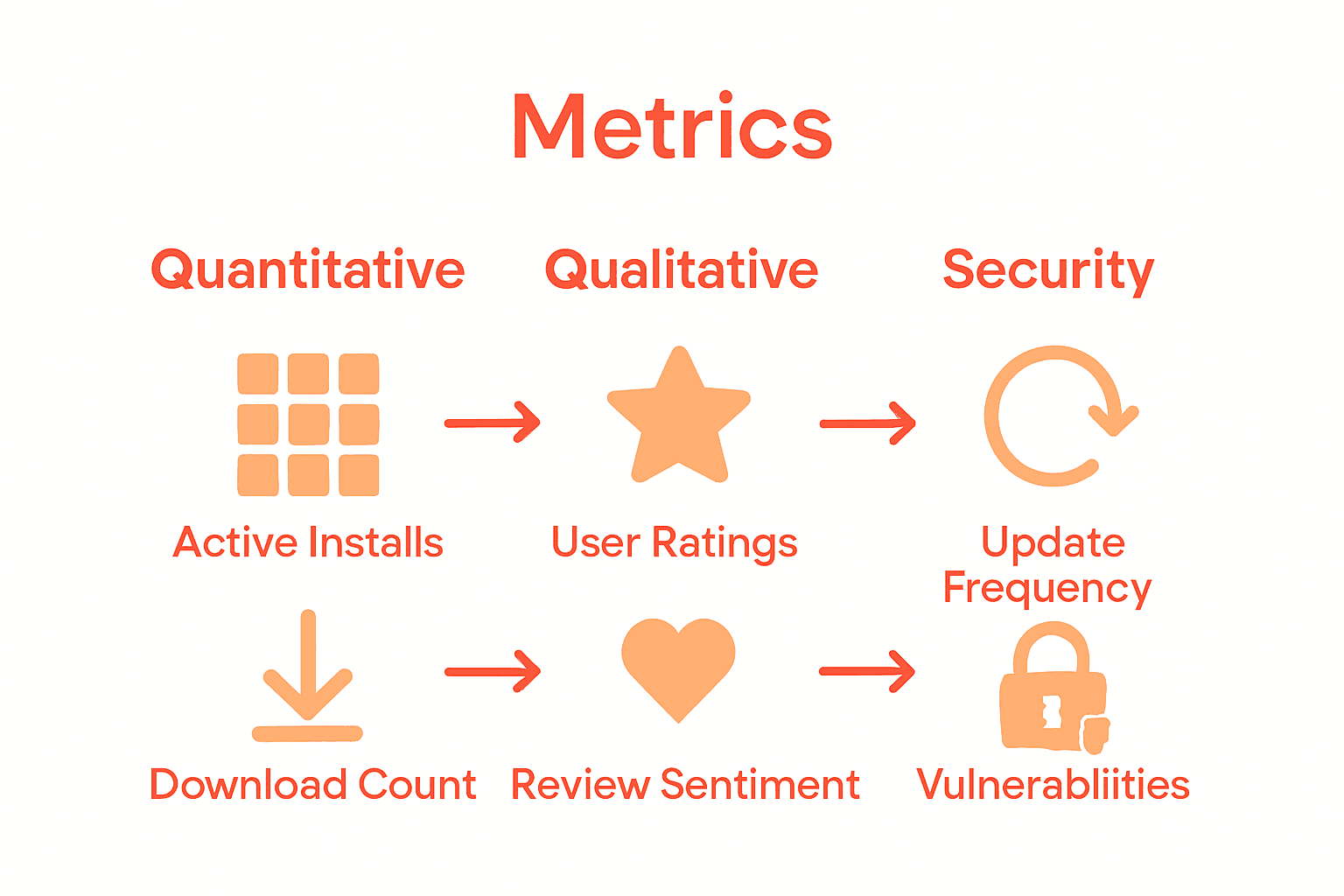
Research from arxiv.org provides comprehensive insights into software package popularity metrics, revealing multiple dimensions of measurement. These popularity metrics can be categorized into several key types:
- Quantitative Metrics
- Total Active Installations
- Download Count
- Monthly Active Users
- Installation Rate
- Qualitative Metrics
- User Ratings
- Review Sentiment
- Community Engagement
- Support Response Times
From a security perspective, arxiv.org highlights that popularity metrics are not just performance indicators but crucial risk assessment tools. The study demonstrates how installation bases can serve as early warning systems for potential vulnerabilities, making these metrics critical for website administrators and security professionals.
Understanding these multifaceted metrics requires a holistic approach. Developers and website managers must look beyond raw numbers and consider the contextual nuances that transform simple statistics into meaningful insights about a plugin’s true value and potential impact on WordPress websites.
How Plugin Popularity Is Determined And Tracked
Tracking plugin popularity involves a complex ecosystem of measurement techniques that go beyond simple download statistics. Why Use Plugin Detection Tools highlights the sophisticated methods professionals employ to understand a plugin’s true impact and relevance.
According to make.wordpress.org, the WordPress plugin landscape is experiencing rapid evolution, with tracking mechanisms becoming increasingly nuanced. Key methods for determining plugin popularity include:
- Official WordPress Repository Metrics
- Active Installation Counts
- User Ratings and Reviews
- Compatibility with Latest WordPress Versions
- Support Thread Activity
- External Tracking Mechanisms
- Third-Party Analytics Platforms
- Website Scanning Tools
- Performance and Security Monitoring
- Community Engagement Tracking
Research from mktclarity.com reveals that the plugin market’s complexity requires multifaceted tracking approaches. The sheer volume of plugin submissions and continuous market expansion demand sophisticated monitoring techniques that can capture nuanced performance indicators beyond traditional metrics.
Professionals leverage advanced tracking tools to gain comprehensive insights into plugin performance. By combining repository data, user feedback, security assessments, and real-world usage statistics, they can develop a holistic understanding of a plugin’s true popularity and potential value within the WordPress ecosystem.
Role Of Plugin Popularity In Development And Marketing
Plugin popularity plays a critical role in shaping both development strategies and marketing approaches within the WordPress ecosystem. Complete Guide to the Role of Plugins in WordPress illuminates the intricate relationship between plugin performance and strategic business decisions.
Research from amraandelma.com reveals that plugin popularity serves multiple strategic functions for developers and marketers:
- Development Insights
- User Demand Identification
- Feature Prioritization
- Performance Benchmarking
- Market Gap Analysis
- Marketing Opportunities
- Targeted User Acquisition
- Competitive Positioning
- Social Proof Generation
- Product Roadmap Planning
According to marketingscoop.com, plugin popularity has become a critical metric for understanding platform growth and user preferences. Popular plugins serve as powerful indicators of emerging trends, user needs, and potential market opportunities.
Successful WordPress professionals leverage plugin popularity metrics to create targeted development roadmaps and marketing strategies. By understanding the nuanced dynamics of plugin performance, they can make data-driven decisions that align with user expectations, market demands, and technological advancements in the WordPress ecosystem.
Risks, Misconceptions, And Common Pitfalls
Navigating the WordPress plugin ecosystem requires a nuanced understanding of potential risks and common misconceptions. Why Use Plugin Detection Tools provides critical insights into the complexities of plugin selection and management.
Research from wpworth.com reveals alarming security implications, highlighting that plugin vulnerabilities represent a significant threat to website integrity. Key risks and misconceptions include:
- Security Misconceptions
- Assuming All Popular Plugins Are Safe
- Neglecting Regular Plugin Updates
- Overlooking Compatibility Checks
- Ignoring Performance Impact
- Common Development Pitfalls
- Downloading Plugins from Unverified Sources
- Installing Excessive Plugins
- Failing to Audit Plugin Permissions
- Disregarding User Feedback and Reviews
The research underscores that plugins account for the majority of WordPress vulnerabilities, often stemming from outdated or poorly maintained code. This stark reality emphasizes the critical need for diligent plugin management and continuous security assessment.
Successful WordPress professionals approach plugin selection with a strategic, risk-aware methodology. They recognize that popularity does not guarantee security or performance, and prioritize thorough vetting, regular updates, and a minimalist approach to plugin integration to maintain website health and user trust.
Unlock the Power of Plugin Popularity Metrics for Your WordPress Strategy
Navigating the complex world of WordPress plugin popularity can feel overwhelming. You want to make smart decisions based on active installations, user ratings, compatibility, and security risks yet gathering and interpreting this data takes time and expertise. Understanding these critical metrics empowers you to identify high-impact plugins, avoid common pitfalls, and elevate your development or marketing efforts with confidence.
Take control of your WordPress ecosystem intelligence today with WPoptic. Our platform offers precise plugin detection, detailed popularity insights, and competitive analysis tools designed for developers, marketers, and security professionals. Explore how you can leverage plugin data to uncover market opportunities and strengthen your website’s foundation by visiting our lead list feature. Don’t wait to make informed, data-driven decisions that enhance your WordPress projects now.

Frequently Asked Questions
What factors determine plugin popularity in the WordPress ecosystem?
Plugin popularity is determined by various factors including active installations, update frequency, user ratings, and compatibility with the latest WordPress versions.
How can I track the popularity of a WordPress plugin?
You can track plugin popularity through the official WordPress repository metrics such as active installation counts, user ratings and reviews, and support thread activity. Additionally, third-party analytics platforms can provide further insights.
What are the risks of using popular plugins?
While popular plugins may seem reliable, they can pose security risks if not regularly updated, lack compatibility with your version of WordPress, or are sourced from unverified developers. It’s crucial to perform thorough vetting before installation.
How does plugin popularity influence development and marketing strategies?
Plugin popularity provides insights into user demand, helps prioritize features, and identifies market gaps. For marketing, it helps in user acquisition and competitive positioning, ensuring that developers align their strategies with user expectations.
